
Skolkovo hosted the MARS 2045 space games: schoolchildren modeled an autonomous settlement on Mars
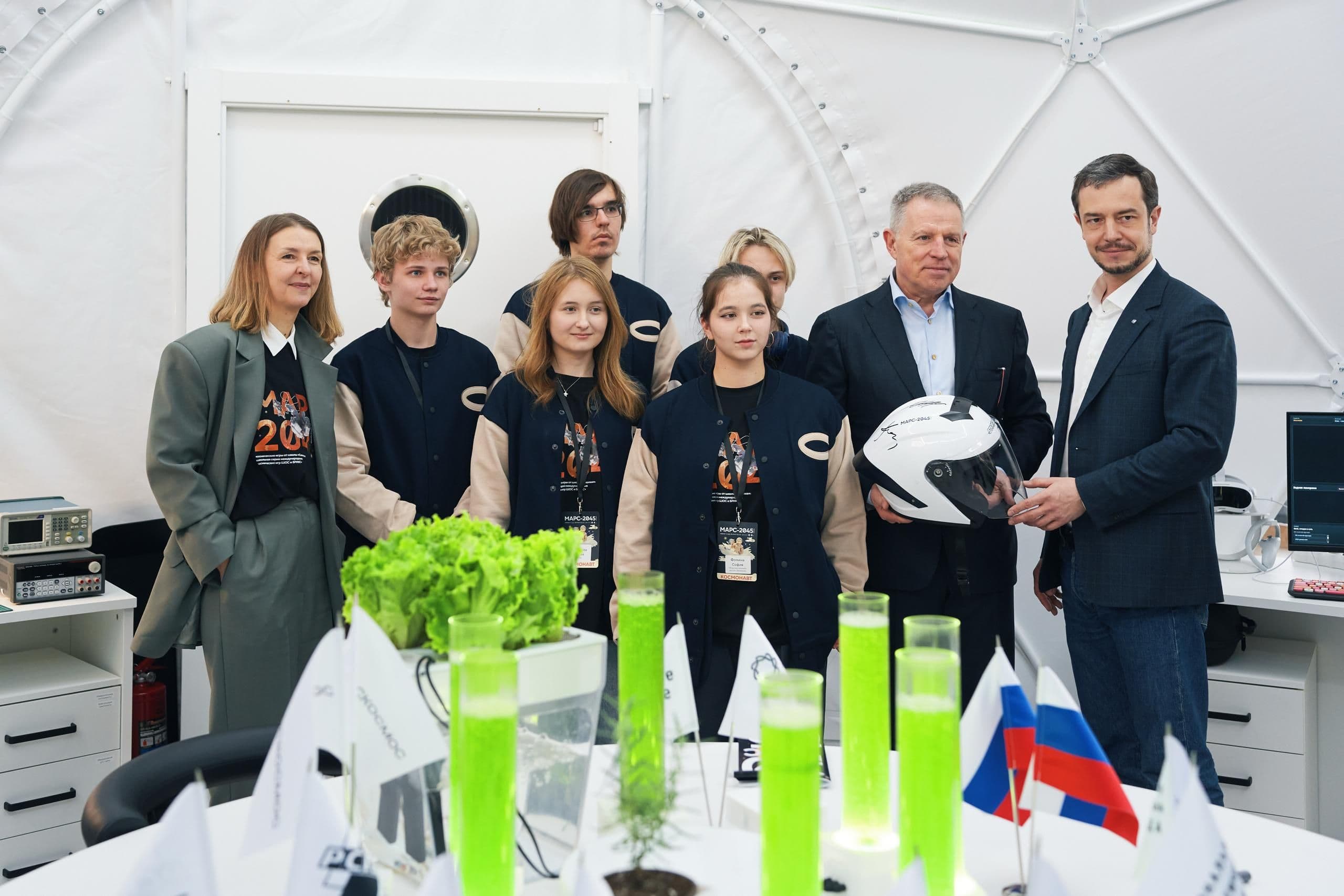
On April 12, the first MARS 2045 space games for schoolchildren ended in Skolkovo. The event was held as part of Space Week and became a pilot stage in preparation for the launch of the International Space Games, a large—scale engineering and educational project initiated by the Russian Federation to develop the human resources potential of the space industry.
The Space Games were organized by the SKOLKA Innovation School and the National Research University Higher School of Economics with the participation of The Roscosmos State Corporation and the National Technology Initiative Circle Movement. The project brought together students, mentors, experts, and representatives of technology teams working in the fields of engineering, biotechnology, robotics, and life support systems.
For three days, from April 10 to 12, high school students from leading schools in Moscow and The Moscow region participated in competitions built in the format of a space mission. The participants had to simulate the creation of an autonomous settlement on Mars: launch a high-tech dome, set up life support systems, provide communications, power supply, water treatment, and complete a research program.
The central element of the games was a special dome that imitated the living conditions on another planet. Inside it, teams of cosmonaut students worked in conditions as close as possible to the real tasks of future space missions. Some participants were responsible for the operation of the Mars station, while others served as teams on Earth and monitored the stability of all systems.
The program paid special attention to practical engineering tasks. The students dealt with energy, robotics, data analysis, biology, chemistry, communications, medicine, psychology, and media support for the mission. This format allowed the participants not only to get acquainted with the structure of the space industry, but also to try themselves in the roles of specialists, without whom the operation of an autonomous station is impossible.
The bioreactor of the Frontiers of Science Guild became a separate element of the exposition on the site. The installation was presented as an example of technology related to life support biotechnologies. The bioreactor demonstrated the principles of controlled cultivation of biological crops and could be used to explain how , in the future, such systems help solve the tasks of autonomous crew support, from obtaining useful biomass to participating in closed bioregenerative cycles.
ParticipationThe Frontiers of Science Guild emphasized the importance of biotechnology for future space missions. In the context of an autonomous settlement on another planet , life support technologies are becoming one of the key areas.: The crew needs to independently maintain a stable environment, produce resources, and minimize dependence on supplies from Earth.
The MARS 2045 space Games have become part of the preparation for the International Space Games. The ICI was conceived as an international large-scale engineering and educational competition in which young engineers simulate the creation of an autonomous settlement on one of the planets of the Solar system. As part of such a mission, participants provide themselves with energy, nutrition and oxygen, as well as perform research tasks.
The project was aimed at training future specialists in key areas for the space industry, from energy and robotics to artificial intelligence, data analysis and life support biotechnologies. It was assumed that the first International Space Games with the participation of national student teams of the CIS, SCO and BRICS+ countries would be held within the framework of the federal project "Personnel for Space" of the National Space Project.
The HSE acted as the operator of the International Space Games, with methodological support from the project office of the National Technological Olympiad in cooperation with the NTI Circle Movement. The project was coordinated with the participation of the Ministry of Science and Higher Education of the Russian Federation and the State Corporation Roscosmos.
The organizers noted that practice-oriented formats allow schoolchildren and students to better understand the real challenges of the space industry. The games showed which competencies will be in demand in the space economy of the future, and helped participants see how engineering, natural sciences and humanities combine within the framework of one mission.
After the presentation of the dome and the start of the national team selection in April, the program of the International Space Games included a distance educational, technological and humanitarian course for teams, organizational training for international participants, the main stage of the games, as well as an international conference on the results of the project.
The first MARS 2045 space games in Skolkovo were an important step towards creating a new educational environment for future engineers, researchers, and technology leaders. The participants not only got acquainted with space topics, but also tried to solve problems in practice, on which the work of autonomous settlements outside the Earth may depend in the future.