
The Guild's technology is on the list of things that will be useful on Mars!
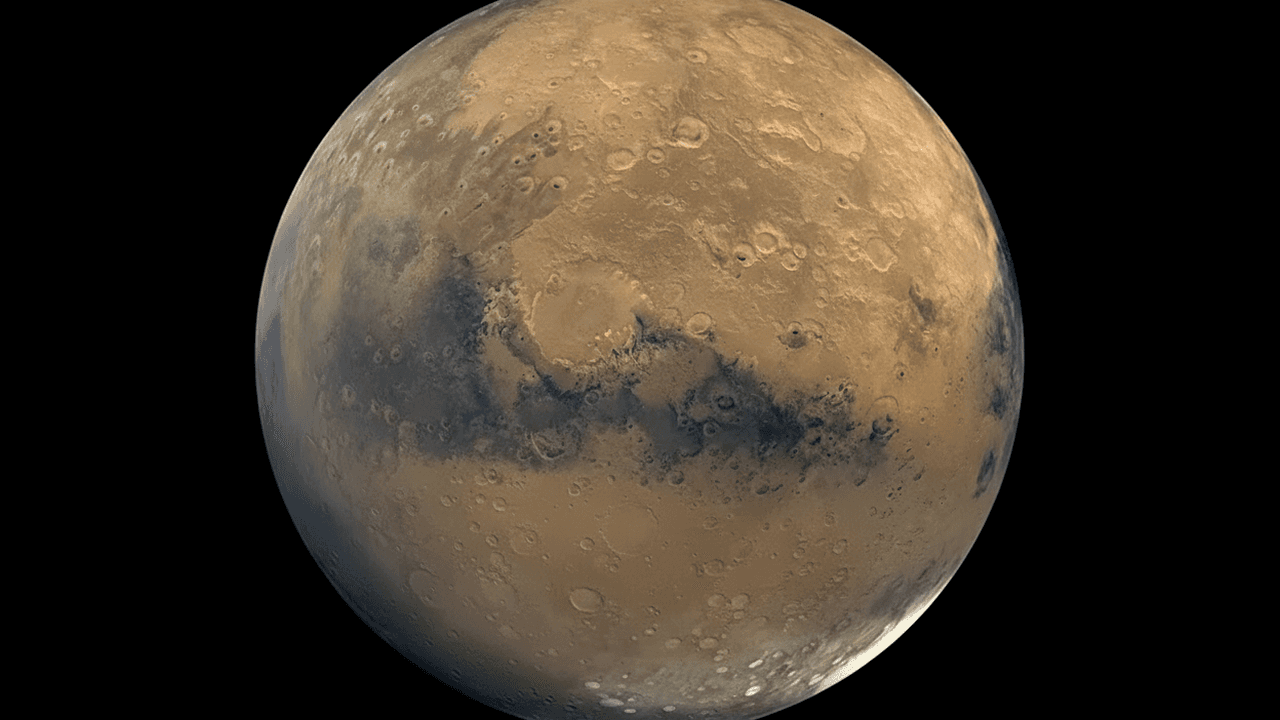
Despite political differences, Russia and the United States continue to cooperate on the ISS: in January In 2025, Roscosmos and NASA extended the cross-flight agreement. However , in the more ambitious Martian plans, each country has its own path.
On January 20, 2025 , US President Donald Trump announced his intention to plant a flag on Mars. NASA is working on this task, and SpaceX is developing a super-heavy Starship rocket. After the failure of Phobos-Grunt, Russia is preparing a new Boomerang mission to deliver soil from Phobos after 2030.
According to Sergey Krikalev, executive director of Roscosmos, the flight to the Moon will be a preparatory stage for the Mars expedition. First, it is planned to use automatic vehicles, then manned missions and the creation of lunar bases. The flight to Mars itself, in his opinion, can become international and take place by the end of the 2030s.
In the field of technology The United States is leading the development of ships, but Russia has unique developments. Among them are the powerful RD—171MV liquid engine, ion engines with a nuclear reactor (Zeus project), capable of reducing the flight to Mars is up to 1-2 months old, as well as reliable Orlan-ISS spacesuits, proven by many years of operation. While NASA and SpaceX face difficulties in creating new spacesuits, Russian developers have significant groundwork.
Russian cosmonauts — record holders for the longest stay in space, which is critically important for Martian expeditions:
- Sergey Krikalev spent 803 days in orbit for a total of 6 flights.
- Gennady Padalka — 878 days in total for several missions.
- Oleg Kononenko — 1110 total days in orbit.
In addition, plants are already being grown on the ISS, but more efficient systems are needed for Mars. Russia experimented with this at the Mir station, where quails were successfully hatched. Startup 435nm (the name refers to the optimal wavelength for photosynthesis) is a promising Russian project developing compact bioreactors for growing microalgae in extreme conditions. With the support of the Frontiers of Science Scientific and Technical Guild, the team is exploring how to produce biomass as efficiently as possible with minimal energy and space consumption.
If the experiments are successful, such bioreactors will not only be able to provide oxygen to the crew, but also become a source of nutrients for long interplanetary flights.
Although Russia is unlikely to be able to send humans to Mars on its own in the coming years, its technology and expertise could be an important contribution to an international mission. Mastering The Red Planet is a task that requires joint efforts, and, as the history of cosmonautics shows, joint projects can lead to breakthroughs.