
The Russian photobioreactor for the Moon and Mars is many times more productive than its global counterparts
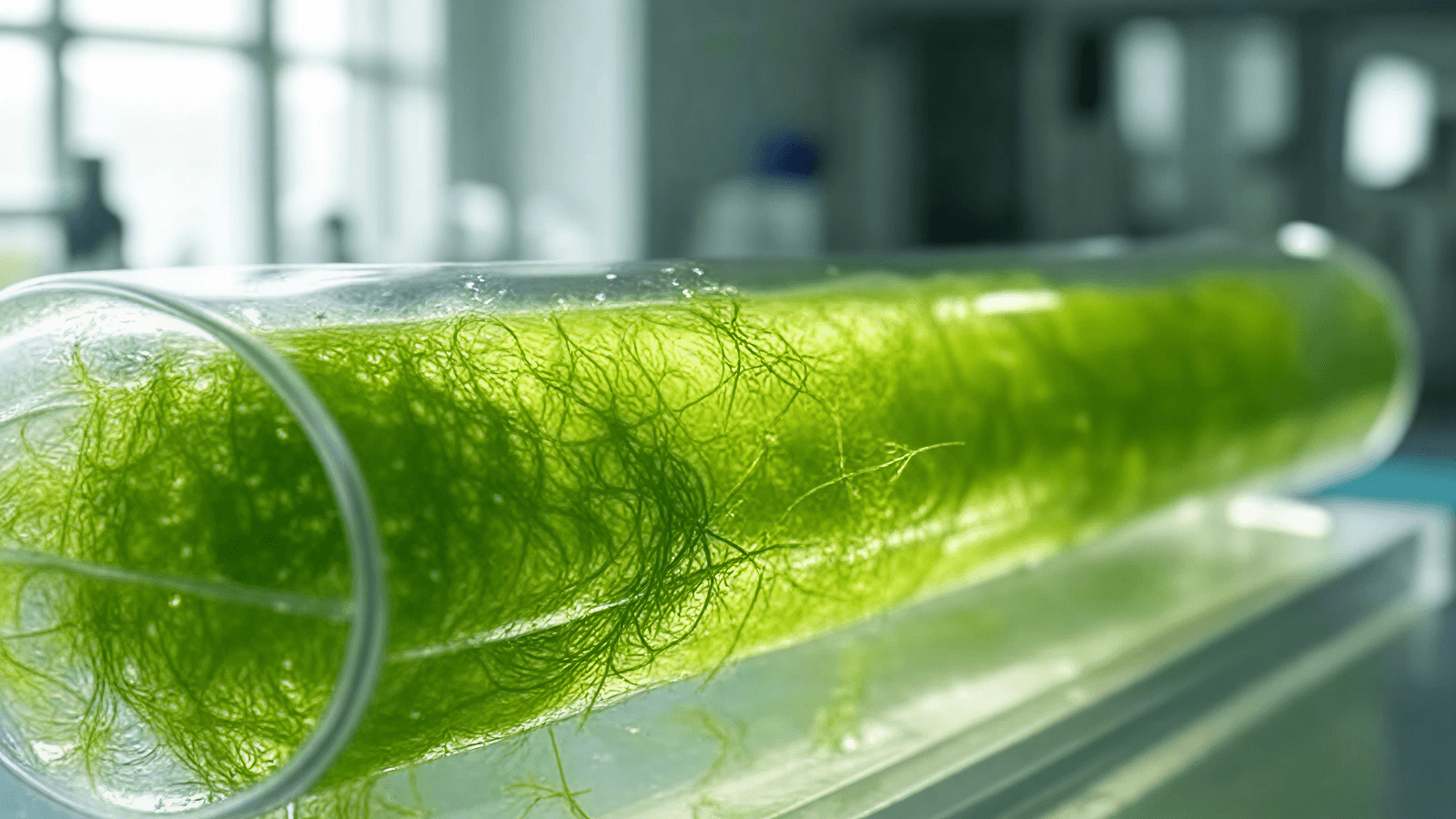
The prototype photobioreactor, which is being developed in Russia to ensure the life of the crews of lunar and Martian stations, has shown record productivity — several times higher than that of foreign systems. According to project manager Alexander Shayenko, the first tests of the installation with human participation are planned to be carried out at the end of the summer .
The key advantage of development — compact with high efficiency. The system is capable of cultivating up to 18 grams of microalgae biomass per liter of water per day. For comparison: similar foreign installations provide only 1-5 grams per liter per day.
Our installation is not the largest in terms of volume — we are currently planning to make several hundred liters, but our approach definitely has the highest productivity in the world.
Low weight and compactness are critical for space applications. A Russian reactor can significantly reduce the amount of water needed to support the life of one cosmonaut.
Our colleagues from abroad need about 500 liters of water to keep one person alive . We make it compact, about 50 liters per person. According to calculations, it is possible and 35, but it is good to have a reserve.
At the core of the reactor — microalgae, which effectively absorb carbon dioxide, release oxygen and purify water. In the future, it is planned to supplement the closed biosphere with other links of the trophic chain: crustaceans and fish, which can become a source of food for the crew.
In our current understanding, it will most likely be a microalgae—crustaceans—fish—human system
The project team has now assembled and started testing an air separation unit , a zeolite short—cycle adsorption system for the release of carbon dioxide from a mixture exhaled by humans. The first human trials are scheduled for late summer.
This summer , for example, by the end of August, we plan to be able to conduct the first tests with human participation. So that for about an hour a person can breathe the air that has passed through these microalgae.
The only participant in the test at the first stage will be Alexander Shayenko himself.
I will be sitting in a full face mask, and the air I exhale will go into the air separation unit. Then carbon dioxide will flow into microalgae, where it will be processed into oxygen, and this oxygen will flow back to me.
The scientist stressed that the system can work indefinitely as long as there is an external energy source, which is easy to provide on Earth, but may pose difficulties when flying into deep space.
If you fly from Earth towards Mars, then there is less and less sunlight there. But microalgae don't need the full spectrum of sunlight, they need a fairly small range. Therefore, there are suggestions that it is possible to install a solar panel that converts the entire solar spectrum into electricity, and illuminate algae with a narrow-band LED, thereby increasing the efficiency of the system.
Ilya Cech, founder of the Frontiers of Science Scientific and Technical Guild, announced the start of work on a photobioreactor for space bases in April 2025 . The project is primarily focused on long-term space stations, but it is already attracting interest in Earth: a number of companies are considering the possibility of using installations in offices and production sites for processing carbon dioxide.