
Astrocosmic online school "Parsek": the start of the second module
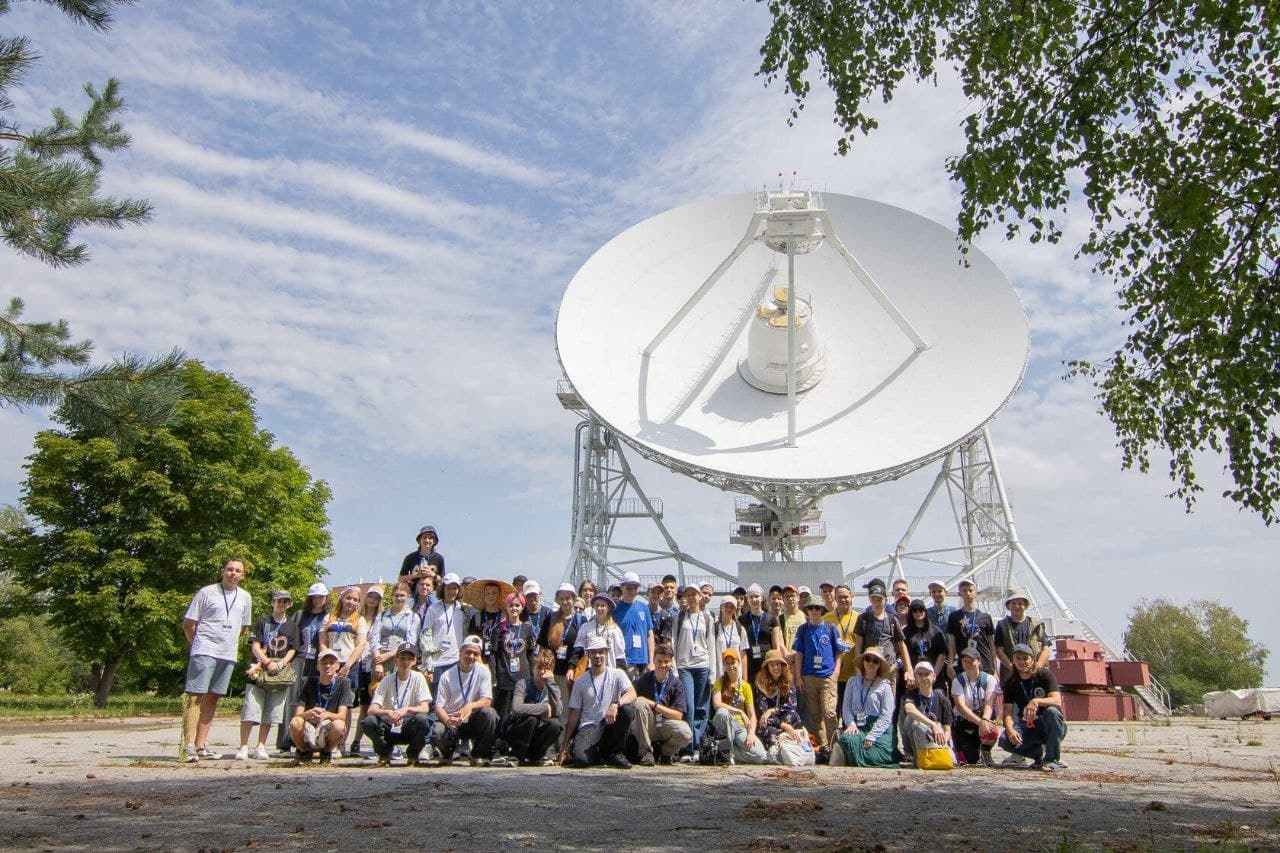
A project that changes the way students think about how they can do science. The Parsek online astrocosmic School is a pilot project of the Trajectory Foundation created for those who want not just to look at the stars, but to really study them. The training is conducted by leading Russian scientists and graduates of the Trajectory Astrophysical School. The first pilot module was successfully completed in January 2026, and now the organizers are opening recruitment for the second module of the program.
"Parsek" is not a one—time course, but the start of a long-term project. The goal of the organizers is to create an online space where students 7-11 Students from different cities will be able to immerse themselves in real scientific activities under the guidance of professional scientists. The project brings together curious students and experts using modern remote work formats. The remote format allows you to connect from anywhere in the world, and individual work with a supervisor gives participants the opportunity to complete a project that will remain in their portfolio.
Parsek is designed for those who appreciate live communication, not just video lectures, who want to become part of the scientific community even far from the capital's universities, who are eager to do their own research projects and like to solve atypical tasks.
- The student chooses a topic of interest and/or a scientific supervisor for one module.
- After registering on the educational platform of the Trajectory Foundation, he gets access to materials and chat with a teacher.
- The training takes place both independently and online with the supervisor and other students.
- At the end of the module, the participant presents his project. at the final conference, where he receives feedback from the Foundation's experts.
Studying at Parsek takes about 3 hours a week on average. In addition to knowledge and skills, each participant receives a certificate.
The first module: successful start
The first pilot module took place from October 24, 2025 to January 16, 2026. The first group of graduates defended their projects and received certificates. The participants worked on real scientific tasks, from searching for variable radio sources to searching for high-luminosity emission stars in other galaxies.
Module 2: what awaits the participants
The second module will be held from May 1 to November 30, 2026.
The program includes several key components:
- Online meetings are held weekly on Fridays. at 18:00 Moscow time. The format of the meetings alternately changes: a scientific seminar where scientists and invited speakers talk about their research.; laboratory — a training seminar to discuss the progress of the project and Astronomy News; lecture hall — popular lectures by leading scientists.
- The General Astronomy course takes place weekly at Mondays at 18:00 Moscow time and is aimed at getting basic ideas about astronomical science and the subject of its study.
- Remote monitoring. In partnership with The Kourov Astronomical Observatory of the Ural Federal University The University has organized remote telescope observations MASTER II-Ural. Participants will be able to independently observe the selected object.
- Elements of astroengineering are sections that They will open optics and mechanics, radio astronomy, and the basics to students. 3D modeling, as well as the basics of electronics and electrical engineering.
- The Forum is the final online event at the end a module where participants present the results of their work.
Mentors of the project
Leading scientists from various scientific institutions work with the participants: Traffic police of Moscow State University, SAO RAS, PRAO, ACC FIAN and others.
- Anton Biryukov — Scientific director of the school "Parsek", astronomer, popularizer of science, Candidate of Physico-mathematical Sciences (Tel Aviv University and Moscow State University).
- Maria Bogdanova — physicist, astronomy teacher, Candidate of Physico-mathematical Sciences.
- Elena Brylyakova — astrophysicist, AFS tutor (Pushchino Radio Astronomy Observatory of ACC FIAN).
- Margarita Maricheva — astrophysicist, AFS tutor, Candidate of Physico-Mathematical Sciences (Special Astrophysical Observatory of the Russian Academy of Sciences).
- Olga Sholukhova — astrophysicist, PhD Physical and Mathematical Sciences (Special Astrophysical Observatory of the Russian Academy of Sciences).
- Vyacheslav Zelenev — Astrophysics student, graduate and the AFS tutor (INAFIT NRU MEPhI)
Senior students of the astronomy departments of the country's leading universities who have experience working with schoolchildren also participate in the project .
Further plans
"Parsek" is just the beginning. In the future, the organizers plan to launch modules in physics, mathematics and programming, and add interdisciplinary projects at the intersection of astrophysics, data science and machine learning.
The project provides an opportunity to become a part of the scientific community, even for those who live far from the capital's universities, to carry out their own research under the guidance of a real scientist and take the first step into science together with Parsek.