
Cosmos VC

A hybrid PE + VC fund investing in mature science-driven businesses and early-stage technology companies
Fund size$100M
Fund term10 years
Typical stake5–20%
StagesSeed, A, B
PortfolioSeed: 10+ A–B: 12–15
Typical ticketSeed: $1M A–B: $6–8M
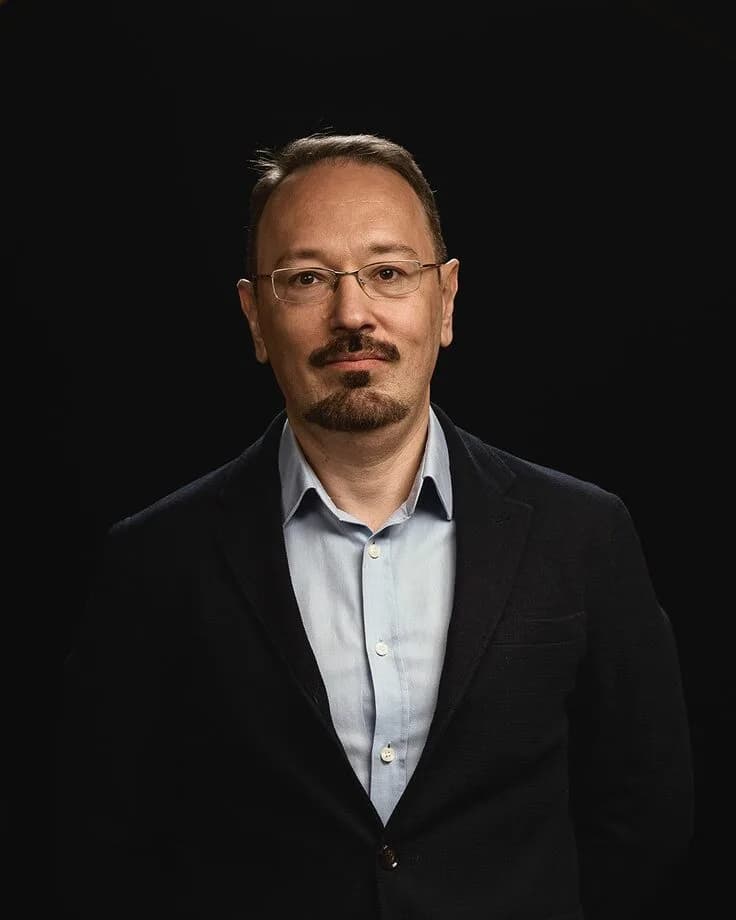
Evgeny Kuznetsov

EVGENY KUZNETSOV

Managing Partner, Cosmos VC

Partner, CEO at Orbita Capital Partners

Fund mission

Cosmos VC backs companies whose technologies and expertise underpin the future space economy. Priority is given to cluster residents and partners delivering contracts under Russia’s national “Space” project. A key investment criterion is dual-use potential: near-term applicability on Earth and long-term upside in space—building a more resilient fund model and reducing classic space-startup risk.

Investment model

Private Equity

80% of fund capital

Acquiring mature businesses with a significant stake to develop the company and exit later.

  • Typical ticket: $6–8M
  • Number of companies: 10–12

Venture Capital

20% of fund capital

Investing in young technology companies at early stages with high scaling potential.

  • Typical ticket: $1M
  • Number of companies: 10

Target investors

Private family offices

Technology corporations

Major banks

Approach and focus areas

Emergent approach

  • Invest in companies building blocks of the future space economy.
  • Focus on synergy across portfolio projects.
  • Create new opportunities by connecting portfolio companies.

Investment criteria

  • Current commercial use on Earth.
  • Potential for space applications.
  • Synergy with the existing portfolio.
  • Technology scalability.

Priority areas

  • New materials and coatings.
  • Power systems and storage.
  • Robotics and autonomous systems.
  • Biotechnology for space applications.

Fund formation

Fund structure

  • Limited partnership with GP (manager) and LPs.
  • Investor admission/exit and profit distribution governed by agreement.
  • Planned fund jurisdiction: UAE / Hong Kong.

Investment process

  • Investment committee decisions within 7 days.
  • IC composition: GP, LPs and independent experts.
  • Funnel: 500+ screened → 100 analysed → 35 to IC → 20+ investments.
  • Stages: sourcing → analysis → term sheet → due diligence → IC.

Role of the fund

  • Access to technology trends, startups and M&A opportunities.
  • Lower risk and flexible budget load.
  • Main capital calls in the first five years.
  • Higher corporate valuation and innovation profile.

Roadmap

2026

Launch

Capital raise, investment process design, team build-out

2027–2029

Investing

Active deployment phase, 20+ deals

2030–2033

Development

Hands-on support to scale portfolio companies

2034–2036

Exits

Realising the portfolio via M&A with strategics or IPOs

Drivers of market growth in Russia

Technology

  • Rapid AI development and applications with potential use in space.
  • Advances in ICT, fast data transfer, neural networks and machine learning.
  • New materials and propulsion approaches that lower production cost.
  • Ecology and biology forming a basis for partially closed ecosystems in orbit and on planetary surfaces.

Economics

  • Funds and institutions able to pool private capital for large, complex missions.
  • Space as mainstream business: telecom, Earth observation, tourism, launch insurance.
  • Higher space-tech valuations driven by private players and strong multiples.
  • Relaunch of the space cluster and a shift to a public–private model for space technology in Russia.

Growth outlook

SpaceTech

~3× by 2030

Demand for global connectivity, LEO constellations, defence, science and environmental monitoring.

Satellite communications

up to ~5× by 2030

Accelerating demand for global connectivity and larger satellite fleets.

In-orbit manufacturing

~10× by 2030

Microgravity research and new materials development.

Space travel

~3× by 2030

Lower trip cost, more private players and stronger competition.

Space medicine

up to ~5× by 2030

New technologies to produce rare substances in microgravity.

AI-driven solutions

~3× by 2030

Growing data volumes requiring processing and process automation.
«Ex astris, scientia»

Language